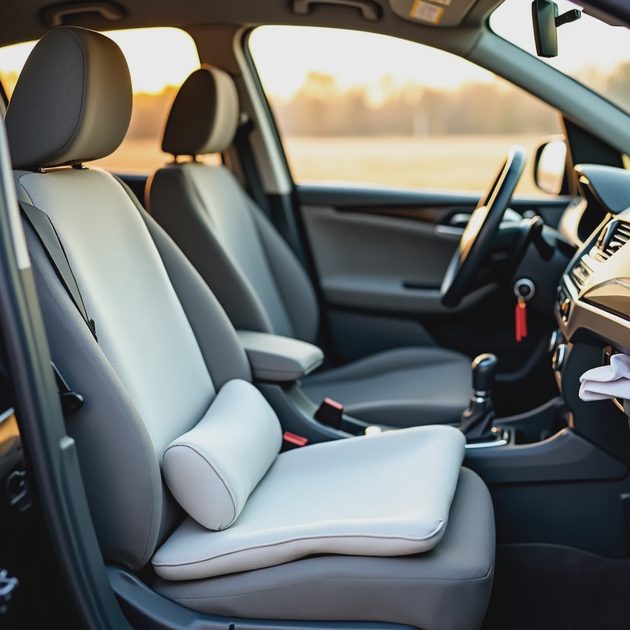
There is a version of car comfort that costs real money. Better seats. Noise-isolating glass. A suspension that absorbs highway seams like they barely exist. That version is nice, but it is not the version I live with. I drive a Subaru Outback with cloth seats and a reasonable amount of road noise. It is a good car. It is not a luxury car.
What I have learned over years of weekend escapes and longer hauls is that small, inexpensive changes often do more for comfort than you would expect. Not because they transform the car — they don't — but because they remove small sources of friction that add up over 200 miles. A pressure point here, a cluttered footwell there, the constant slide of a phone on the center console. The things that don't bother you on a grocery run become the things you can't ignore by hour four.
These are the upgrades that made a difference for me. All of them cost under $50. None of them required tools. Every one has earned its place after at least one full season of use.
A seat cushion that doesn't feel like a gimmick
I was skeptical, and I think you should be, too. Most seat cushions sold for driving are either too soft or too thick, and they push your head toward the ceiling in a way that ruins the driving position. The one that finally worked for me was a simple memory foam wedge with a nonslip bottom. It cost $34. It added just enough support under my thighs to change the pressure point on long drives, and it didn't alter the seat height enough to matter.
The real test came on a drive to Moab that took most of a Friday. Five hours in the seat, and I didn't do the thing I usually do — shifting weight from one hip to the other every 20 minutes. That alone was worth the money.
A phone mount that stays where you put it
I have tried the vent-clip mounts, the suction-cup mounts, the magnetic thing that stuck to the dashboard for three days and then fell off in the heat. None of them lasted. The one I use now mounts to the seat rail bolt, with an arm that positions the phone just to the right of the steering wheel. It doesn't block the vent, doesn't fall, and keeps the phone in my peripheral vision instead of demanding a full glance.
The cost was $28, and I installed it in under ten minutes. The improvement to the cabin — no dangling cords, no greasy suction marks on the windshield — was immediate.
A trash solution that doesn't look like one
For years, I used a plastic bag looped around the gear shift. It worked in the sense that it existed, but it was ugly and always in the way. A small, leakproof car bin that straps to the back of the center console solved this for $18. It sits within reach, holds more than you would think, and — this matters more to me than it probably should — it doesn't make the cabin feel like a garbage can.
On a weekend trip, the small accumulations of wrappers, napkins, and receipts can make a car feel chaotic fast. This one change kept the passenger footwell clear and my general mood slightly better. Mood is part of comfort, even if nobody puts it in a spec sheet.
A lumbar pillow that stays in the car
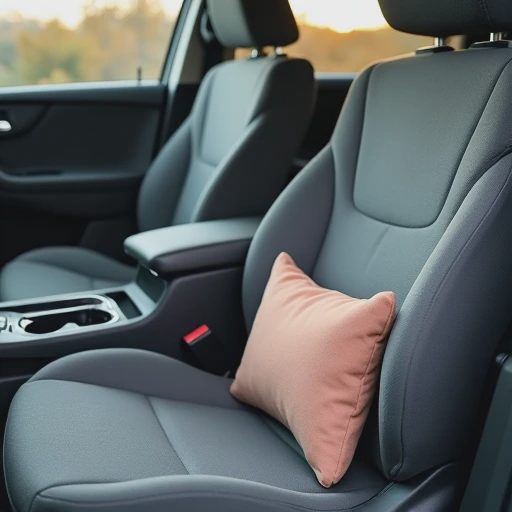
I don't have back problems exactly, but I have back awareness. After about hour three, my lower back starts asking questions I can't answer. I tried one of those mesh lumbar supports and immediately hated it — too aggressive, like a hand pressing against my spine. What worked instead was a small, firm throw-pillow style cushion that I bought from a home goods store for $22. It is not marketed for cars. It fits perfectly between the seat bolsters.
The difference is subtle — less about support and more about filling the hollow space that most car seats have at the small of the back. I leave it in the car year-round now, and every passenger who has used it has asked where I got it.
A microfiber cloth tucked in the door pocket
This barely counts as an upgrade, but it deserves mention because it solves a problem that annoys me more than it should: dust on the touchscreen. A single microfiber cloth, folded small, lives in the driver's door pocket. I use it for the screen, for sunglasses, for the occasional coffee drip on the center console. Cost: maybe $3. Satisfaction: outsized.
A simple cargo net for the trunk
Grocery runs and road trips have this in common: things slide around in the back. A basic stretch cargo net — four hooks, $15, no installation drama — keeps my travel bag and cooler from drifting across the cargo area on every turn. On winding mountain roads, which I drive more often than I drive straight highways, this matters. The absence of things thumping against the trunk panels is its own kind of comfort.
What I'd do differently next time
Honestly, there is not much I would change about this list. It has been refined over multiple trips and a fair number of things that didn't work. If I had to pick one item I was late to discover, it is the lumbar pillow. That should have been the first thing, not the fifth. Comfort, I have learned, starts where you contact the car — and for most of us, that means the seat. Everything else builds from there.
If you only remember one thing
Don't wait until you are uncomfortable to start solving the problem. The best comfort upgrades are the ones you install on a Tuesday and forget about by Saturday — because they are working so quietly you don't notice them at all.


Letters
No letters yet — be the first to write.