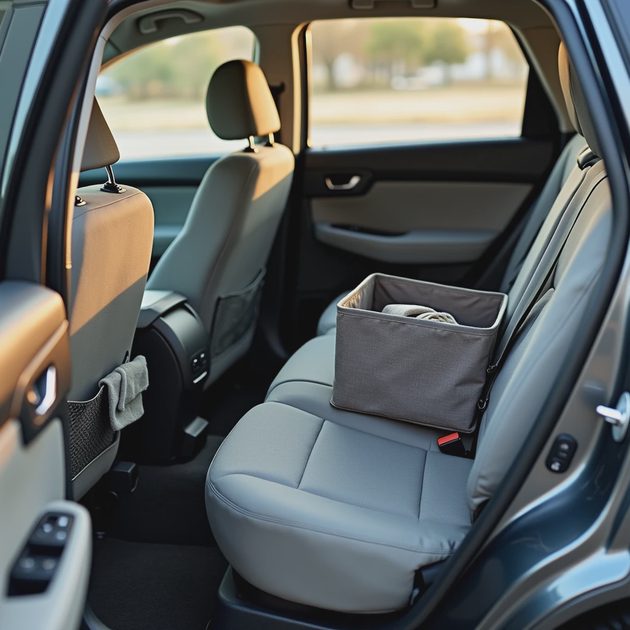
I have a theory about car organization. Most systems fail not because they are bad systems, but because they demand too much upkeep. They work beautifully on the day you set them up — everything in its labeled bin, every cord wrapped neatly, every surface wiped clean — and then life happens. A coffee cup tips. A receipt multiplies. A bag of trail mix opens itself in the passenger footwell. Within two weeks, the system is a memory and the car looks like it always did.
What I wanted was something different. A setup that survived the mess of actual use. Something that didn't require discipline to maintain because it was designed to absorb chaos rather than resist it. It took me a few years and several failed attempts to find it, but I now have a system that stays clean with almost no effort. Not spotless. Not Instagram-clean. Just clean enough that getting into the car feels good instead of slightly disappointing.
Here is how it works.
The one-container rule
The first thing I changed was the number of containers. I used to have a system with four or five small bins — one for snacks, one for emergency gear, one for reusable bags, one for miscellaneous. It looked organized in theory. In practice, everything migrated. A snack wrapper ended up in the emergency bin. A shopping bag drifted into the snack zone. The categories blurred until none of them meant anything.
Now I use exactly one container in the cabin. It is a fabric bin that sits behind the center console, within reach of both front seats, and it holds whatever needs holding on that particular trip. On a weekend drive, it might contain a water bottle, a phone charger, and a small bag of almonds. On a grocery day, the bin comes out entirely and the space stays clear. By reducing the number of places things can go, I reduced the number of places things can go wrong.
If you only remember one thing: Fewer containers mean fewer decisions about where something belongs. Decision fatigue is what kills a car organization system.
The passenger seat rule
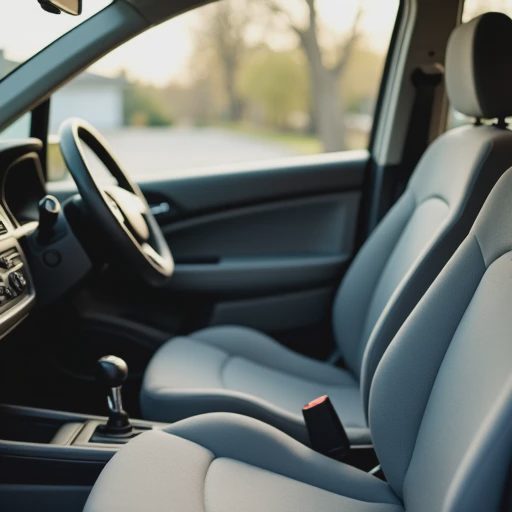
This is the simplest rule I have and the one that makes the biggest visual difference. Nothing stays on the passenger seat overnight. Not a bag. Not a jacket. Not a stack of mail I meant to bring inside. When I park the car for the day, the passenger seat gets cleared.
The reason this works is psychological as much as practical. An empty passenger seat makes the car feel organized even if the back seat is slightly chaotic. It is the first thing you see when you open the driver's door, and it sets the tone for the whole cabin. When I leave something on that seat, it gives everything else permission to accumulate. An empty seat says the opposite: this car is in order.
The trunk that doesn't become storage
The cargo area of an Outback is generous, which is both a blessing and a liability. A large trunk invites you to treat it like a closet — a place where things live indefinitely because there is room for them. I fell into this for years. Camp chairs I used once a season. A bag of old shopping bags. A pair of boots that were technically still good but hadn't been worn since the previous winter.
The fix was simple but required honesty. I removed everything from the trunk and only put back the items I had used in the last two road trips. The rest went into the garage or the donation pile. What remained fit into a single cargo organizer — a collapsible fabric trunk with two compartments — and left more than half the cargo area empty. That empty space has become my favorite feature of the car. It means the trunk is ready for the next trip, not still carrying the last one.
What I'd do differently next time: I would have done this years ago. The trunk is for the trip you are on, not a museum of trips you already took.
The glovebox that only holds things I actually need
Open your glovebox right now and tell me what percentage of its contents you have used in the last three months. I did this exercise and the answer was maybe thirty percent. The rest was insurance cards from old policies, napkins that had disintegrated into paper dust, and three pens that didn't write.
I emptied it completely. Then I put back only: the current registration and insurance, a tire pressure gauge, a small notebook and one working pen, a microfiber cloth for the touchscreen, and a pack of gum. That is it. There is now room to find everything without pulling out a pile of paper. The glovebox is boring now. Boring is the goal.
The daily reset
None of this works without one small habit. Before I walk into the house at the end of the day, I take thirty seconds to scan the cabin and remove anything that doesn't live there. A coffee cup. A receipt from the gas station. A sweatshirt I wore in the morning but don't need tomorrow. Thirty seconds. That is the entire maintenance plan.
The genius of this habit is that it prevents accumulation. Clutter in a car is never one big mess. It is a series of small, individually harmless items that decided to stay. The daily reset interrupts that process before it starts. It is not cleaning. It is just returning things to where they belong.
What the road taught me about clutter
I used to think a clean car required discipline. What I know now is that it requires a system that works with your laziness, not against it. The one container, the empty passenger seat, the honest trunk, the boring glovebox, the thirty-second reset — these are not ambitious. They are deliberately small enough that I actually do them.
And here is the part nobody tells you: a clean car makes a drive feel better. It is not just aesthetics. It is the absence of low-grade distraction, the freedom of knowing that everything in the car is supposed to be there. On a long drive, that mental quiet is worth more than any accessory you can buy.



Letters
No letters yet — be the first to write.