Most rest stops are forgettable by design. A concrete bathroom, a vending machine with questionable snacks, a patch of grass that has seen better days. You stop because you need to, not because you want to. You leave ten minutes later with no memory of the place except maybe the quality of the hand soap.
But every so often, the highway delivers something unexpected. A rest stop that doesn't just break up the drive — it becomes part of it. A place where you find yourself lingering longer than necessary, walking to the edge of the viewing platform, standing still while the wind does its work. These are the rest stops that feel less like pit stops and more like small destinations in their own right.
I have pulled into hundreds of rest stops over the years. These are the ones I remember.
The one with the canyon view you don't earn
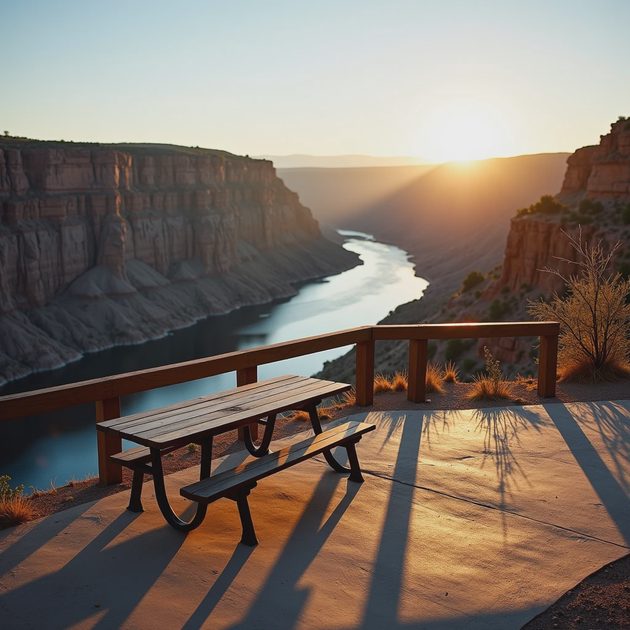
There is a rest area on I-70 just east of Glenwood Canyon that should not be as good as it is. You exit the highway at the Grizzly Creek interchange, and within a hundred yards of parking, you are standing at the edge of a canyon that people drive hours to see. The Colorado River runs below, narrow and fast in the spring, calmer by late summer. The canyon walls rise on both sides, layered rock in shades of red and gray that shift as the sun moves.
You did not hike here. You did not earn the view with effort. You simply pulled off the highway, and there it was — one of the best canyon overlooks in the state, free of charge, with bathrooms that are decently clean and a few picnic tables tucked under the cottonwoods.
I stop here every time I drive to Glenwood Springs or points west. Not because I need to. Because I want to. Because standing at the railing for five minutes and watching the river trace its ancient line through the rock is a kind of reset that caffeine cannot replicate.
If you only remember one thing
The picnic tables are far enough from the parking lot that the highway noise fades to a hum. Sit down. Eat something. Let the canyon do the work.
The one in the middle of nowhere with the best silence
Driving east from Denver on I-70, past the last suburbs and into the plains, the landscape opens up until it feels like the sky is doing most of the work. Somewhere before the Kansas border, there is a rest stop called the Colorado Welcome Center at Burlington. It is not scenic in the postcard sense. There are no mountains. No canyons. No dramatic overlooks.
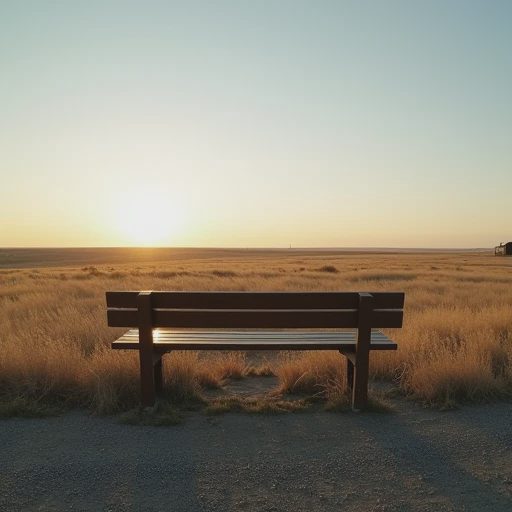
What it has is space. The parking lot backs up against open grassland that stretches uninterrupted to the horizon. Behind the rest area building, there is a small walking path that leads to a few benches facing east. If you sit there in the early morning, the silence is almost complete. No engine noise. No conversation. Just wind moving through grass that has been moving through wind for thousands of years.
I stopped here once at sunrise on a drive to Missouri. I had planned to be back on the highway in ten minutes. I stayed for forty. The sunrise over the plains is not a postcard sunrise. It is slow and wide and indifferent to whether you are watching. That indifference is part of what makes it good.
Worth the extra mile
Keep walking past the benches. The path continues another hundred yards to a small rise where the view opens up even further. You won't see it from the parking lot.
The one on the continental divide that feels like cheating
The Eisenhower-Johnson Memorial Tunnels on I-70 cross the Continental Divide at over 11,000 feet. Most people drive straight through. But just before the eastbound tunnel entrance, there is a pull-off rest area that offers a view of the divide without the effort of climbing it.
The parking area is small, wedged between the highway and the mountain, and the air is thin in a way that reminds you how high you are. Snow lingers here into June some years. The view looks back toward Loveland Pass and the peaks that feed the Colorado River on one side and the South Platte on the other.
What makes this rest stop feel like a destination is the threshold it represents. You are standing on the spine of the continent. Water to the west flows toward the Pacific. Water to the east flows toward the Atlantic. There is a sign explaining this, and I have read it every time I have stopped, because some facts are worth reading more than once.
I try to stop here on every trip through the divide. The stop is brief — five minutes, sometimes less if the wind is sharp — but it marks a transition in the drive. After this, the mountains are behind you, or ahead of you, depending on your direction. Either way, the journey has crossed a line.
The one by the river in the desert
On the drive between Green River and Salina, Utah, I-70 runs through some of the most desolate and beautiful landscape in the American West. The San Rafael Swell rises out of the desert in layers of stone that look older than language. For miles, there is nothing. No towns. No gas stations. Just rock and sky and the highway cutting a clean line through it.
And then, unexpectedly, there is a rest area called the Salt Wash View Area. It is not a rest area in the traditional sense. There is a parking lot, a few informational signs, and a short path to an overlook above the San Rafael River. The river is not wide or dramatic. It is a thin ribbon of green winding through a canyon it carved over millions of years, and the contrast between the desert above and the life below is the kind of thing that makes you stand still without meaning to.
I stopped here on a Tuesday afternoon in late September. The temperature was perfect — warm sun, cool breeze — and I sat at a picnic table near the overlook for twenty minutes without seeing another vehicle. The interstate hummed in the distance, but the canyon swallowed the sound. A raven circled overhead once and disappeared.
What I'd do differently next time
Bring a sandwich and make it lunch. There is a picnic table with the best view in the county, and I ate trail mix at it like someone who didn't plan ahead.
When the rest stop becomes the destination
I have friends who measure road trips in miles per hour. They are the ones who drive straight through, stopping only for gas, eating sandwiches over the steering wheel. I understand the impulse. Arriving is the point, and delay feels like inefficiency.
But the rest stops I remember are not delays. They are small arrivals in the middle of the journey — places where the landscape asserted itself and I had the good sense to pay attention. The part nobody tells you about a great rest stop is that it changes your relationship to the drive. It reminds you that the space between where you started and where you are going is not empty. It is full of things worth stopping for.
If you only remember one thing: Plan fewer miles. Stop more often. The best rest stops are not on the itinerary until you pull into them.
Letters
No letters yet — be the first to write.