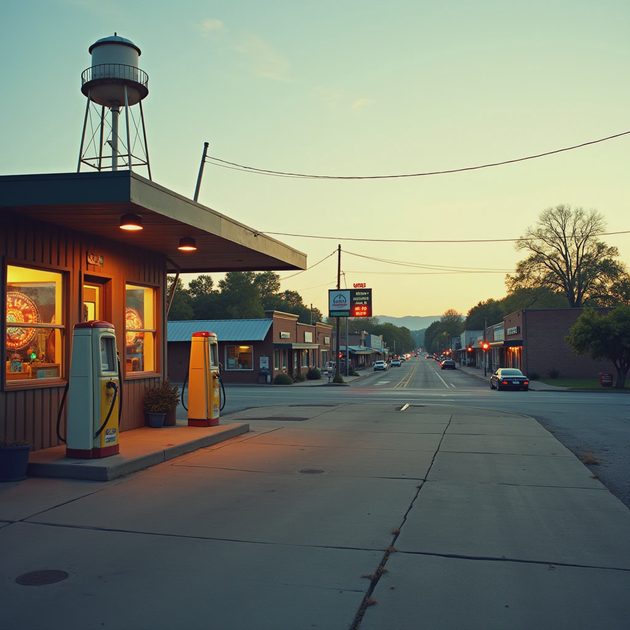
The gas stop is the most overlooked moment in a road trip. It is treated as an interruption — a necessary transaction to get out of the way as quickly as possible. Pull in, pump the fuel, maybe grab a coffee, leave. The goal is efficiency. The result is a stop you won't remember ten miles later.
I used to treat gas stops the same way. Then I noticed something. On the trips I remember most vividly, the gas stops were not blank spaces between destinations. They were small experiences in their own right. A conversation at the pump. A side road explored on a whim. A snack that became a tradition. The stop itself had become part of the trip, not just a pause in it.
This doesn't require more time. It requires a small shift in how you use the time you are already spending. Here is how I learned to do it.
Step away from the pump before you do anything else
The first thing most people do after starting the pump is reach for their phone. I have done this hundreds of times. Check messages. Scroll through something. Kill the three minutes while the tank fills. It feels productive, but it is the opposite. It keeps your attention in the same narrow channel it has been in for the past several hours of driving.
Now I do something different. While the pump runs, I stand up straight and walk a few steps away from the car. Not far — just to the edge of the concrete pad, or around to the other side of the vehicle. I stretch my arms. I look at something that is not a screen. The sky. The horizon. The odd architectural detail of the gas station canopy that nobody ever notices.
The point is not the stretch itself, though that helps. The point is to break the tunnel vision that long drives create. A gas stop is the easiest moment to reset your posture and your attention, because you are already standing. All you have to do is not pick up the phone.
If you only remember one thing
The three minutes while the pump runs are not dead time. They are the first real break your body has had in hours. Use them.
Walk inside even if you don't need anything
This is the habit that changed gas stops for me. I walk into the station even when I don't need a snack or a drink or a bathroom. I walk in just to see what is there.
Sometimes the answer is nothing. A standard convenience store with the same shelves as every other location in the chain. But sometimes the answer is something unexpected. A rack of postcards from the 1980s. A cooler stocked with local cheese. A bulletin board covered in handwritten notices for tractor repairs and church suppers and horses for sale. The bulletin board alone is worth the walk. It tells you more about a place than any travel guide.
At a station in western Kansas, I once found a shelf of homemade jams near the back, sold on the honor system with a coffee can for payment. The woman behind the counter told me her sister made them. I bought a jar of peach jam and ate it on toast at a rest stop an hour later. That jam would not exist in my memory if I had paid at the pump and driven away.
What I'd do differently next time
Ask the attendant what is worth seeing nearby, even if I am not planning to stop anywhere else. The answer is usually modest — a park, a viewpoint, a diner — but modest is exactly what I am looking for.
Find the local snack you won't see again
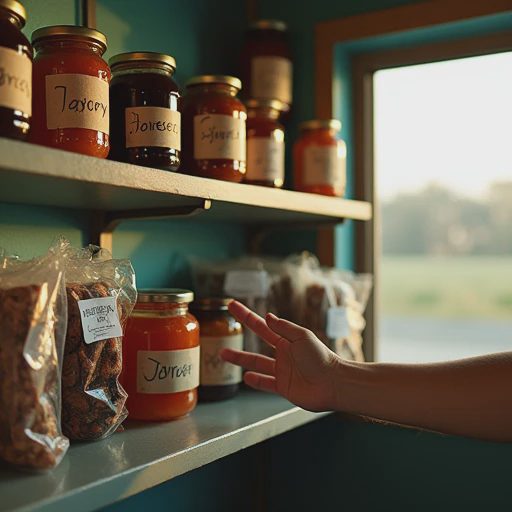
Every gas station has the national brands. The same candy bars, the same chips, the same energy drinks in the same tall cans. Ignore all of that. Walk to the edges of the store. Look for the items that don't belong to a national distribution network.
It might be beef jerky from a processor in the next county. It might be baked goods wrapped in plastic with a hand-labeled sticker. It might be a bag of locally roasted coffee or a jar of salsa with a phone number on the label. These items exist because someone local convinced the station owner to carry them, and they are almost always worth trying.
I have a small tradition now. On every road trip, I buy one local snack from a gas station and I don't eat it right away. I save it for later in the drive, when the highway has gone quiet and the snacks I brought from home have lost their appeal. The local snack tastes better then — not because it is objectively superior, but because it carries the memory of the place where I found it.
Take the side street, not the highway ramp
Most gas stations sit just off a highway exit, and the instinct is to get back on the highway as quickly as possible. The ramp is right there. The GPS is already recalculating. The efficient choice is obvious.
But sometimes, if you have an extra five minutes, there is a better choice. Instead of returning immediately to the highway, turn the other way. Drive into the town the exit serves, even if only for a few blocks. See what the main street looks like. Notice whether there is a courthouse or a library or a park with old trees. You don't need to stop again. You just need to see.
I did this once in a small town called Genoa, Colorado. The gas station was on the edge of town, a single pump on a gravel lot. Instead of turning back toward the highway, I drove three blocks into the center of town. There was a brick schoolhouse from the 1920s, a grain elevator casting a long shadow, and a street of houses with wide porches and wind chimes. I was there for maybe eight minutes. Genoa is not a destination. It will never appear in a guidebook. But I remember it more clearly than some national parks I have visited, because I chose to see it instead of driving past.
Make one gas stop the meal stop
On a long drive, the gas stop and the food stop are usually separate events. You fuel the car at one exit and find lunch at another. This divides the stop into two short transactions, neither of which feels like a real break.
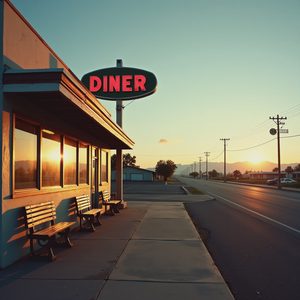
I try to combine them. Once or twice per trip, I choose a gas station in a town that also has a diner or a cafe within walking distance. I fill the tank, park the car in a spot where it won't be in anyone's way, and walk to the food. Walking, even for two blocks, changes the nature of the stop. It becomes a small destination. A place where you arrived, not just a place where you paused.
The gas stations that work best for this are in small towns where the main street is still intact. The pump is on the edge of downtown, and the diner is a five-minute walk past a hardware store and a closed movie theater and a bench dedicated to someone who loved the town. By the time you sit down to eat, you have seen the place. The meal feels earned.
What the gas stop gives back
The part nobody tells you about road trips is that the memories cluster around the stops, not the highway miles. The miles are beautiful and meditative and necessary, but they blur together. What stays sharp are the places where you pulled over. The gas station with the homemade jam. The town you explored for eight minutes. The conversation with an attendant whose name you never learned.
A gas stop is a door. Most of the time, you walk past it. But if you open it — if you walk inside, ask a question, try the local snack, take the side street — the whole trip changes. The journey stops being a line between two points and becomes a series of small discoveries. The gas station is not an interruption. It is an opportunity hiding in plain sight.
Letters
No letters yet — be the first to write.