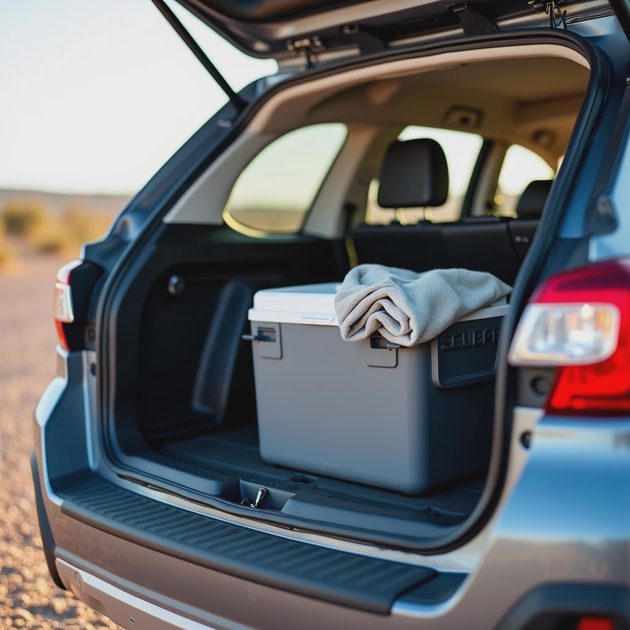
I didn't set out to have opinions about coolers. That part happened slowly, over years of weekend drives where the food situation was either a highlight or a quiet disappointment. The soggy sandwich,the lukewarm soda,the cheese that didn't survive a hot afternoon in the trunk. You know the small defeats I mean.
A cooler, I eventually realized, is not just a box for cold things. It is a small promise that when you pull over somewhere worth stopping, the food and drink will be worth stopping for too. That sounds more poetic than a cooler deserves. But I mean it plainly: a good cooler changes the rhythm of a road trip. It makes a roadside pullout feel like a planned meal instead of a surrender.
I have now used the same compact cooler for two full seasons of weekend trips — desert drives, mountain mornings, one very long day across eastern Colorado that I would not recommend in July — and it has earned its place in the trunk.
What I was looking for
I didn't need a massive rotomolded cooler that requires two people to carry. I am not hauling a week's worth of supplies or keeping fish cold for three days. I needed something sized for two people on a one- or two-night trip. Compact enough to fit behind the driver's seat or in the cargo area without dominating it. Stout enough to hold ice through a full day of driving. And simple enough that I wouldn't dread cleaning it afterward.
The soft-sided versus hard-sided decision was the first fork. I tried a soft cooler for a while — the kind that collapses flat when not in use. It was fine for a grocery run. For a road trip, it slumped, sweated, and struggled to keep temperature once the outside air climbed past 80 degrees. I went back to hard-sided and haven't questioned it.
What I ended up with
After reading far too many reviews and talking myself out of spending more than this category deserves, I landed on a 26-quart hard-sided cooler from a brand that makes mid-tier gear for people who actually use it. It is not a premium name. It cost around $45. It has a hinged lid, a drain plug that hasn't leaked yet, and a handle that doesn't pinch my fingers when I carry it one-handed.
The 26-quart size turned out to be the sweet spot. It holds a six-pack, a few sandwiches, a bag of fruit, and a small container of whatever I prepped the night before. There is still room for ice packs tucked along the sides. Anything larger would feel like overkill for a weekend. Anything smaller would force me to make choices I do not want to make at 7 a.m. on a Saturday.
The real-world test
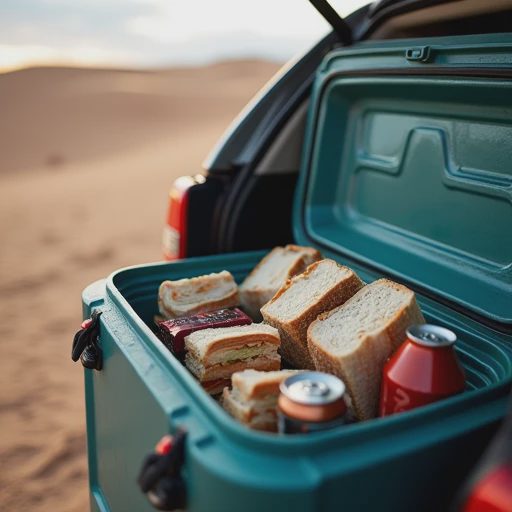
The trip that convinced me was a two-day drive to the San Luis Valley in late August. The temperature crossed 90 by midday. The cooler sat in the back of the Outback, shaded by a blanket I had tossed over it for a little extra insulation. I opened it twice — once for lunch at a pullout near the dunes, once for a cold drink at the end of the day. The ice packs, which started frozen solid at 6 a.m., were still cold and only partially melted by 6 p.m.
Nothing was soggy. Nothing had shifted. I had packed the cooler the way I pack a bag for a flight — with a small strategy — and the cooler rewarded me. The sandwiches were intact. The drinks were cold. The small chocolate bar I had tucked in as an afterthought was not a melted mess. That last detail felt like a victory too small to mention to anyone else, but I am telling you here because I think you will understand.
What I'd do differently next time
I would buy the same cooler again, but I would also buy a second set of ice packs. The kind that freeze solid and stay cold longer than loose cubes. I have learned that loose ice creates a wet bottom layer that eventually finds its way into the bread. Ice packs, arranged vertically along the walls of the cooler, keep things cold and dry. Simple insight. Took me too long to learn it.
If you only remember one thing
The best cooler is the one sized for the trip you actually take, not the trip you imagine. Most of us imagine a weeklong expedition. Most of us take a weekend. Buy for the weekend.
A few other things worth mentioning
There are more expensive coolers that hold ice for five days. If you need that, buy one. Most weekend drivers don't. What matters more than ice retention beyond 24 hours is how the cooler fits your car and your packing rhythm. Mine lives in the trunk most of the season, sometimes holding groceries, sometimes holding nothing, always ready for the next Saturday morning when leaving early feels more necessary than sleeping in.


Letters
No letters yet — be the first to write.