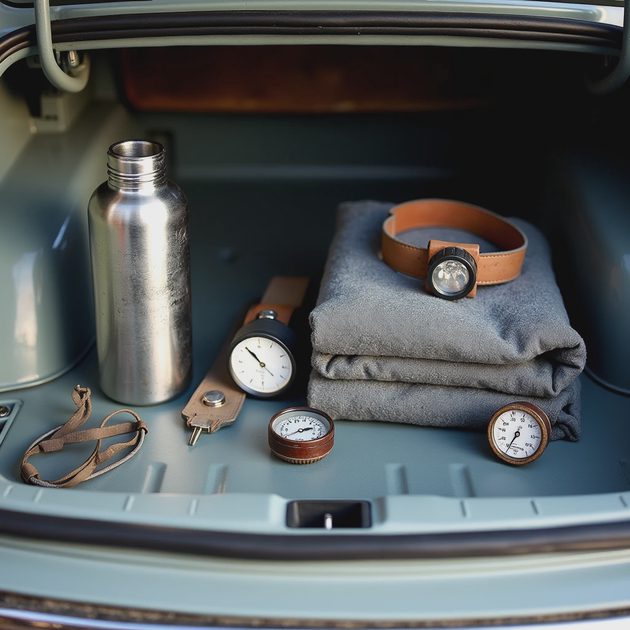
Most road trip gear has a short lifespan. Not because it breaks — though some of it does — but because it fails the quieter test of whether you actually reach for it when the trip gets underway. The trunk is full of good intentions. The camping stove you haven't lit in two seasons. The portable shower that seemed like a good idea at the time. The gadget that solved a problem you no longer remember having.
But every once in a while, something earns its place. You buy it without much ceremony, use it on a trip, then another, then another, and one day you realize it has been in the car for years and you have never once considered replacing it. These are those items for me. Not the flashiest things. Just the things that lasted.
A stainless steel water bottle that outlived three cars
The bottle is unremarkable to look at. Silver, double-walled, a few dents from parking lot drops and one notable fall from the roof of the car when I forgot it was up there. I bought it at a grocery store in Salida seven years ago because I had left my previous bottle at a rest stop near Poncha Springs and was tired of buying plastic water bottles at every gas station.
It holds 32 ounces, which is exactly enough to get me between meaningful stops without forcing extra bathroom breaks. The vacuum insulation works well enough that ice cubes survive a full day in the car even when the temperature outside crosses 90. It has rolled under the passenger seat, frozen solid on a winter night when I forgot to bring it inside, and been filled with gas station coffee when I didn't have a proper mug. It has never leaked. It has never rusted. It has never given me a reason to look for something better.
The part nobody tells you about good gear is that it disappears. You stop noticing it because it never fails. The water bottle is the most boring thing in my car, and that is the highest compliment I can give it.
If you only remember one thing
Buy one good water bottle and stop buying the others. The others are not better. They are just newer.
A headlamp that lives in the glovebox
I did not buy this for road trips. I bought it for a camping trip where I needed to set up a tent in the dark. That was six years ago. The tent is long gone, but the headlamp moved into the glovebox and has never moved out.
On road trips, it gets used for things I didn't anticipate. Finding a dropped phone in the footwell at night. Reading a map in the passenger seat while someone else drives. Checking under the hood when a warning light comes on outside a small town in Utah and the only light is the moon. The headlamp cost about twenty dollars. It has a red light mode that doesn't ruin your night vision, and it runs on AAA batteries that I replace maybe once a year.
What makes it road trip gear rather than camping gear is the glovebox. By living there permanently, it is always within reach when the unexpected happens. I have never once packed it for a trip, because it was already in the car. That is the whole point.
A wool blanket that does not look like camping gear
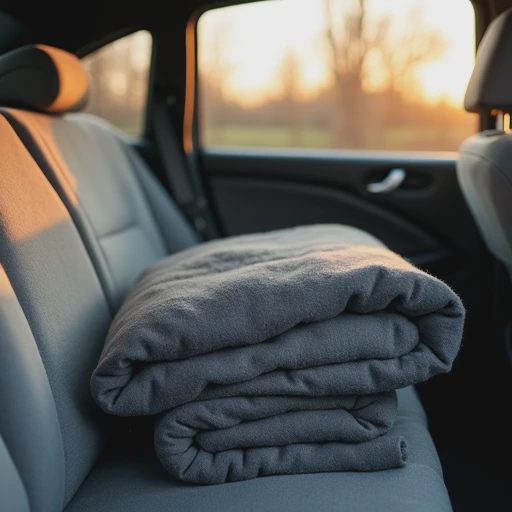
This was a gift, originally. A thick wool blanket in a muted gray and charcoal pattern that someone gave me for a birthday years ago. It lived on the couch for the first winter. Then I threw it in the back of the car before a cold-weather drive to the mountains, and it has lived there ever since.
The wool blanket has no technical features. It is not lightweight. It does not pack down small. It does not have a waterproof backing or a stuff sack or a brand name that outdoor enthusiasts would recognize. What it has is warmth that works even when damp, a weight that feels grounding across your lap at a chilly overlook, and the quiet dignity of an object that does its job without claiming to be anything more.
I have used it as an extra layer at cold trailheads, as an impromptu picnic blanket on damp grass, and once as a sunshade draped across the rear window when the car was parked and the afternoon heat was relentless. It smells faintly of cedar now, from the closet where it started its life, and that small detail makes the car feel more like a place I want to be.
What I'd do differently next time
I would have put it in the car sooner. The blanket spent years on the couch when it should have been in the trunk.
A tire pressure gauge that cost more than you'd expect
For years I used the cheap pencil-style tire pressure gauges that gas stations sell for a few dollars. They were inaccurate in ways I couldn't prove but always suspected. One would read 32 psi while another read 28, and I never knew which one to trust.
Three years ago I spent thirty dollars on a dial gauge from a brand that makes tools for mechanics. It is heavier than it needs to be, with a brass fitting and a glow-in-the-dark face that I have never actually needed but appreciate knowing is there. The reading is consistent. Every time. That consistency is worth more than the money.
Checking tire pressure is a small ritual now, not a chore I avoid. Before a long drive, I walk around the car with the gauge and a small notebook and write down the numbers. It takes three minutes. It has caught a slow leak twice before it became a flat tire. The gauge has paid for itself in peace of mind, which is a cliché but also true.
The things that earned their place
Here is what these four items have in common. None of them were expensive. None of them were marketed specifically for road trips. None of them require batteries, apps, or instructions. They are simple tools and simple comforts that solved real, recurring problems in ways I didn't have to think about.
That is the test, I think. The gear you keep using is the gear that stops asking for your attention. It doesn't need to be charged, updated, adjusted, or remembered. It is just there, doing what it does, trip after trip, until you almost forget you bought it. And then one day you write an article like this and realize it has been with you for seven years and a hundred drives, and you have never once regretted the purchase.


Letters
No letters yet — be the first to write.