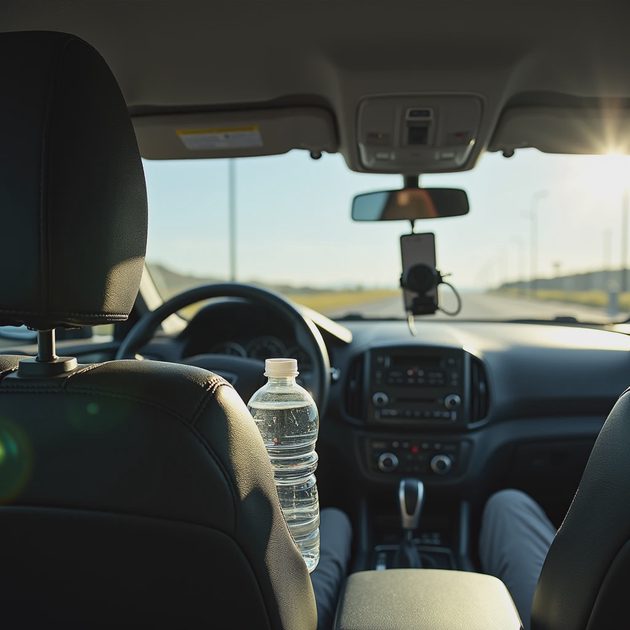
It was a drive to Santa Fe in late July. The kind of heat that makes the asphalt shimmer and turns a car into a greenhouse if you don't manage the sun properly. I left Denver at 6 a.m., which should have been early enough. By noon, I was somewhere south of Pueblo, and everything about the cabin was annoying me.
The sun was hitting my left arm at an angle the visor couldn't block. My lower back had started asking questions I couldn't answer. A water bottle had rolled under the brake pedal at a stoplight, which was briefly terrifying and mostly just inconvenient. The phone mount I had trusted for two years chose that day to lose its grip, depositing my phone into the passenger footwell during a lane change.
None of these things were catastrophic. None of them ruined the trip. But together, across six hours of driving, they turned what should have been a pleasant journey into a low-grade endurance event. I arrived in Santa Fe tired in a way that had nothing to do with the distance.
That drive became a turning point. In the weeks after, I changed five things about my cabin setup. Every change was small. Every change has lasted.
The sun problem I kept ignoring
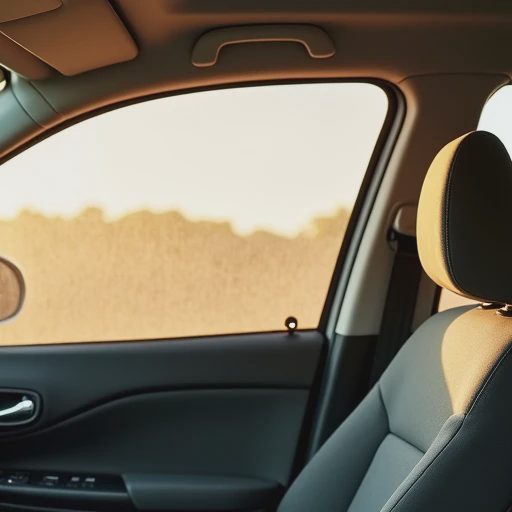
For years, I had been driving with a sun pattern that bothered me on long trips and then disappeared from my memory as soon as I parked. The driver's side window let in heat and glare from mid-morning through early afternoon, and the factory tint did almost nothing to block it. I had accepted this as a minor annoyance — the cost of having windows.
After the Santa Fe drive, I bought a set of removable mesh sun shades for the side windows. They cost about fifteen dollars. They attach with small suction cups and can be put up or taken down in seconds. On a hot day, they block enough sun to keep my left arm from feeling like it is under a heat lamp. On a cool day, they stay in the door pocket.
The difference was immediate and larger than I expected. It was not just about temperature. It was about the quality of the light in the cabin. Direct sun is harsh and demanding. Diffused light, filtered through the mesh, is softer and easier to live with for hours at a time. The sun shades turned the driver's seat from a place I tolerated into a place I could settle into.
If you only remember one thing
Sun management is comfort management. A cabin that feels like a greenhouse will never feel calm, no matter what else you do.
The water bottle that needed a real home
The water bottle incident — the one where it rolled under the brake pedal — was entirely my fault. I had been placing it in the passenger seat or wedging it between the seat and the center console, which worked until it didn't. A sudden stop or a sharp turn, and the bottle was on the move.
After that trip, I bought a simple cup holder expander that fits into the existing center console slot and holds larger bottles securely. It cost less than twenty dollars, and it has not budged in two years. The water bottle now lives in a fixed location, within reach of my right hand, where I can grab it without looking and without worrying about where it might end up.
This change was so small that it almost felt silly to make a purchase for it. But the peace of mind it provides — knowing that nothing is going to roll underfoot during a critical moment — has been worth far more than the price. Some upgrades are about comfort. This one was about safety that felt like comfort.
The phone mount that finally earned its position
The phone mount that failed on the Santa Fe drive was one of those vent-clip models that everyone recommends until they don't work. It had been adequate for short trips around town. On a six-hour drive with varying road surfaces and the occasional bump, it was not adequate at all.
I replaced it with a mount that attaches to the seat rail bolt — a more involved installation, but a more permanent result. The arm positions the phone just to the right of the steering wheel, at dashboard height, where I can glance at it without taking my eyes fully off the road. It doesn't shake. It doesn't fall. It doesn't care how hot the interior gets.
The upgrade cost about thirty dollars and took fifteen minutes to install. What it gave me was the quiet confidence that my navigation would stay visible for the entire drive, regardless of the road conditions. That confidence, over hundreds of miles, translates into lower stress and fewer moments of muttered frustration.
What I'd do differently next time
I would skip the vent-clip models entirely. They work fine for commutes. They are not built for road trips. Buy the one that bolts to something solid and be done with it.
The lumbar support I didn't know I needed
I have never been diagnosed with back problems. I have never seen a chiropractor. I am, by most measures, a person with a functional spine. But on the Santa Fe drive, around hour four, my lower back began a dull protest that I could not ignore or adjust away.
The problem was the gap between the seat back and my lumbar spine. The Outback's driver's seat has adjustable lumbar support, and I had it set to a position that felt fine on short drives. On a long drive, "fine" was not enough. The support was in the wrong place — too high, pressing into the middle of my back instead of the base of my spine — and I had never bothered to fix it because I had never driven far enough to notice.
After that trip, I spent twenty minutes in the driveway adjusting the lumbar support. I moved it lower. I experimented with different depths. I drove around the block, came back, adjusted again. The position I landed on felt slightly strange at first — more support than I was used to in a place I was not used to feeling it. On the next long drive, it felt like the seat had been custom-built for me.
The lumbar adjustment is free. It is already in your car, waiting for you to use it correctly. I had ignored it for years because I assumed the default setting was good enough. It wasn't. If your car has adjustable lumbar support and you haven't experimented with it on a long drive, do that before you buy any aftermarket cushion.
The loose items that had to go
The last change I made was the simplest and the hardest to maintain. I removed everything from the cabin that didn't serve the drive.
The glovebox had become a museum of old insurance cards, napkins that had disintegrated into paper dust, and pens that didn't write. The door pockets held receipts from gas stations I couldn't remember visiting. The center console contained four charging cables, only one of which worked reliably.
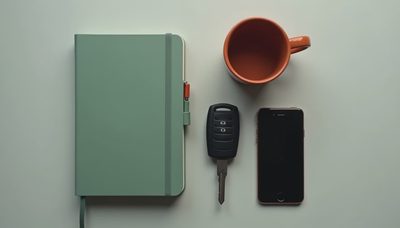
I emptied everything. I threw away what was garbage. I relocated what belonged elsewhere. What remained was a small, intentional collection of items: registration and insurance, a tire gauge, a microfiber cloth, a notebook and pen, one working charging cable, and a pack of gum. The glovebox closed easily for the first time in years. The door pockets were empty enough to hold nothing but the sun shades when I wasn't using them.
A cluttered cabin is a low-grade cognitive drain. Every loose item is a small decision waiting to be made — should I keep this, move this, throw this away — and those decisions add up over the course of a long drive. Removing the clutter removed the decisions. The cabin felt clearer, and so did my attention.
One uncomfortable trip, five lasting changes
None of these changes required major mechanical work or significant expense. The sun shades, the cup holder, the phone mount, the lumbar adjustment, the decluttering — together they cost less than a single night in a hotel, and they have improved every drive I have taken since.
The Santa Fe trip was uncomfortable in a way that I am now grateful for. It forced me to pay attention to things I had been ignoring for years. The small irritations that accumulate on a long drive are not random. They are signals. They tell you what needs to change. The only mistake is not listening.


Letters
No letters yet — be the first to write.