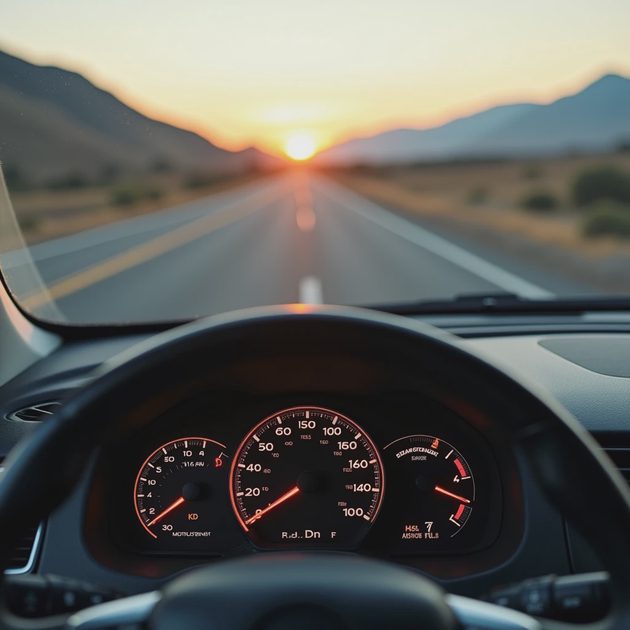
There is a particular kind of road trip that doesn't require a spreadsheet. No hotel reservations. No carefully plotted itinerary with color-coded stops. Just a full tank of gas, a rough direction, and the willingness to let the day unfold without too much interference. I call it the one-tank trip — out and back on a single fill-up — and it has become my favorite way to spend a Saturday.
The one-tank constraint is the secret. It limits the distance to roughly 300 to 400 miles round trip, depending on your car and your patience for highway speeds. That radius is large enough to reach somewhere interesting but small enough that you don't spend the whole day driving. You leave in the morning. You come back in the evening. In between, there is a day that feels longer than it actually is, because the road has a way of stretching time when you let it.
Here is how I plan one without letting the planning ruin the point.
Start with the tank, not the destination
Most trip planning starts with a place. Someone sends you a photo of a mountain town or a lakeside overlook, and you decide you want to go there. That works fine for big trips, but for a one-tank Saturday, I do the opposite. I start with the fuel gauge.
A full tank in my Outback gets me roughly 400 miles on the highway, a little less if the route involves climbing. I mentally draw a circle on the map with a radius of about 150 to 180 miles from Denver. That circle contains mountain passes, high desert, prairie towns, river canyons, and more forest roads than I could explore in a lifetime. The constraint is not limiting. It is liberating. Instead of asking "where should I go," I ask "what direction haven't I pointed the car in a while."
Last month, the answer was northeast. I had not driven toward the Pawnee National Grassland in over a year. The tank was full. I left at 7 a.m. and was home by 5 p.m. with a full day of solitude behind me and almost no plan to speak of. The tank made the decision. I just followed it.
If you only remember one thing
The destination matters less than the direction. Pick a compass point and start driving. The details fill themselves in.
The two-stop rule
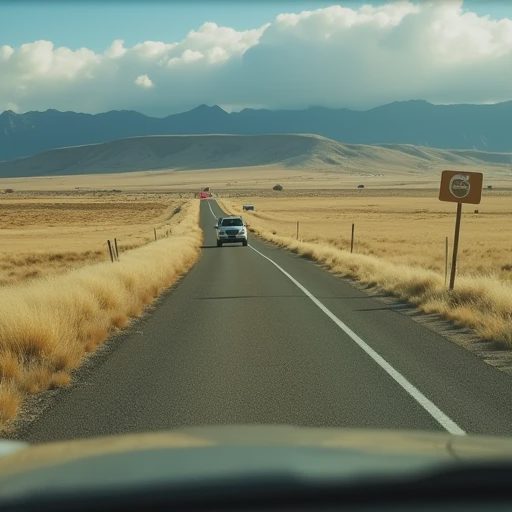
I used to overplan stops. I would research cafes, look up scenic overlooks, read reviews of diners in towns I had never visited. By the time I actually left, I had already experienced the trip in my head, and the real thing felt like a replay of something I had already seen.
Now I limit myself to two planned stops per trip. One is a midpoint — a town, a trailhead, a viewpoint, something that gives the drive a loose shape. The other is a food stop, usually a diner or a bakery I have either visited before or found by searching "best breakfast near [town]" the night before. Everything else I leave open.
The open space between stops is where the trip actually happens. A hand-painted sign for a farm stand you would have driven past on a tighter schedule. A gravel road that climbs toward a ridge and demands to be explored. A small lake you didn't know existed until you saw it glinting through the trees. These are the moments that make a one-tank trip feel like an adventure instead of an errand. They only happen when you leave room for them.
What I'd do differently next time
I would make the midpoint stop looser. A few times I have picked a specific trailhead and then arrived to find it crowded or closed. Now I pick a general area — "the canyon" or "the grasslands" — and let the specific stop reveal itself when I get there.
Pack like you're running an errand, not leaving town
One-tank trips are not expeditions. You are driving a few hours, spending a few hours somewhere, and driving back. You do not need a fully stocked cooler, a change of clothes, or a backup plan for weather that probably won't arrive.
My packing list for a one-tank trip fits in a single sentence: water bottle, snack, jacket, phone charger, notebook, pen. If the weather looks uncertain, I add a rain shell. If the route involves gravel roads, I check the spare tire pressure the night before. That is the entire preparation.
The beauty of packing light for a short trip is that it removes the friction of leaving. When the prep takes ten minutes, you are more likely to actually go. Some of my best one-tank Saturdays started with a decision made at 6:30 a.m. and a departure at 7. The less I pack, the sooner I leave. The sooner I leave, the more day there is to spend.
Let the road decide when to turn around
The hardest part of a one-tank trip is knowing when to head home. On a longer trip with reservations and deadlines, the schedule makes the decision for you. On a Saturday with no fixed plan, you have to decide for yourself when the day is complete.
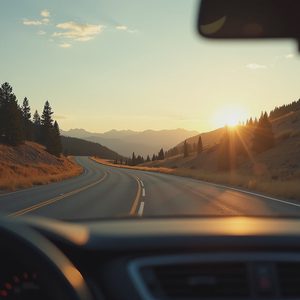
I have learned to listen for a quiet signal. It usually arrives in the early afternoon, around 2 or 3 p.m. The light starts to shift. The energy of the morning gives way to a softer, more reflective mood. I find myself thinking about home — not with urgency, but with a gentle pull. That is the signal. I point the car back toward Denver and let the return leg be its own experience.
The drive home is different from the drive out. You are fuller — of sights, of quiet, of whatever small discoveries the day offered. The same highway feels different in the afternoon light. I usually drive the return leg in near silence, no music, just the road and the thoughts that accumulated over the course of the day. It is a kind of processing that doesn't happen if you rush.
What the one-tank trip gives back
The part nobody tells you about short road trips is that they are not a compromise. They are not the lesser version of a big adventure. They are their own thing — a form of travel that fits into a normal life without demanding vacation days or elaborate planning.
A one-tank trip is a reminder that you don't need to cross state lines to cross into something new. The road outside your door leads to places you have not seen, or places you have seen but not in this season, not in this light, not with this particular version of yourself behind the wheel. The tank is full. The day is open. The overthinking can stay home.
Letters
No letters yet — be the first to write.